Usage
Framework usage description:
Events
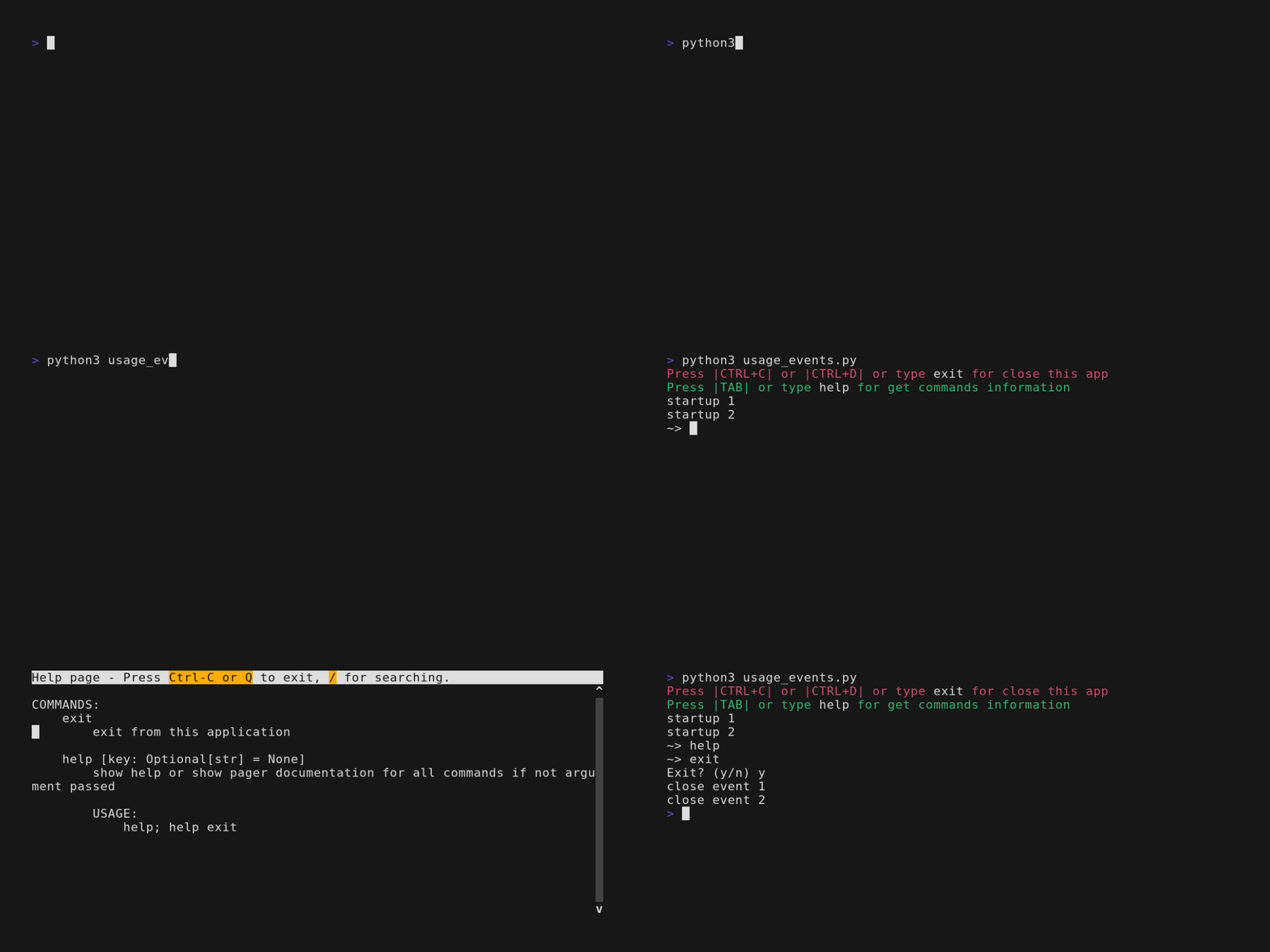
You can set events on application start or close. These events can be useful, for example, when configuring an application.
These events take no arguments and return nothing.
from eggella import Eggella

app = Eggella(__name__)


@app.on_startup()
def startup_1():
    print("startup 1")


@app.on_startup()
def startup_2():
    print("startup 2")


# These events activate if double press CTRL+C or type `exit` command

@app.on_close()
def close_1():
    print("close event 1")


@app.on_close()
def close_2():
    print("close event 2")


if __name__ == '__main__':
    app.loop()
Set key, add description
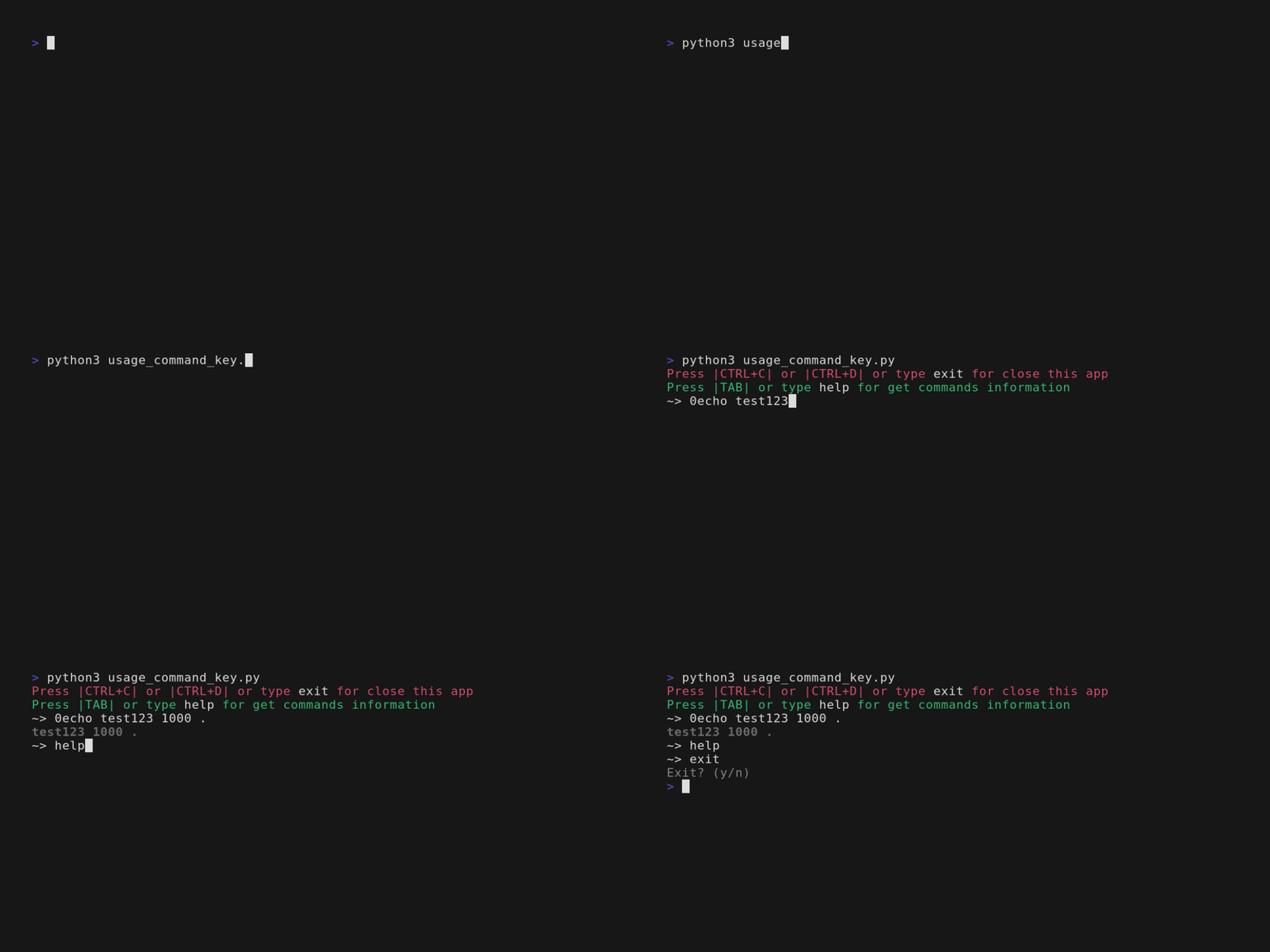
By default, the command key is taken from the name of the function being decorated. If the key needs to be remapped - pass the first key argument.
To add a description of a command, you can pass the short_description parameter, or add
docstring at the beginning of the function:
from eggella import Eggella

app = Eggella(__name__)


@app.on_command("0echo")
def echo(*args):
    """print all passed arguments"""
    return " ".join(args)


if __name__ == '__main__':
    app.loop()
Parse arguments
By default, keys are parsed using the built-in library shlex and converted to annotation-based types:
from eggella import Eggella

app = Eggella(__name__)


@app.on_command()
def hello(name: str):
    """print hello {name}"""
    return f"hello, {name}"

@app.on_command()
def div(a: int, b: int):
    """div two digits"""
    try:
        return a/b
    except ZeroDivisionError:
        return "ZeroDivisionError"


# this build-in function, need set key
@app.on_command("sum")
def sum_(*digits: int):
    """sum all passed digits"""
    return sum(digits)

if __name__ == '__main__':
    app.loop()
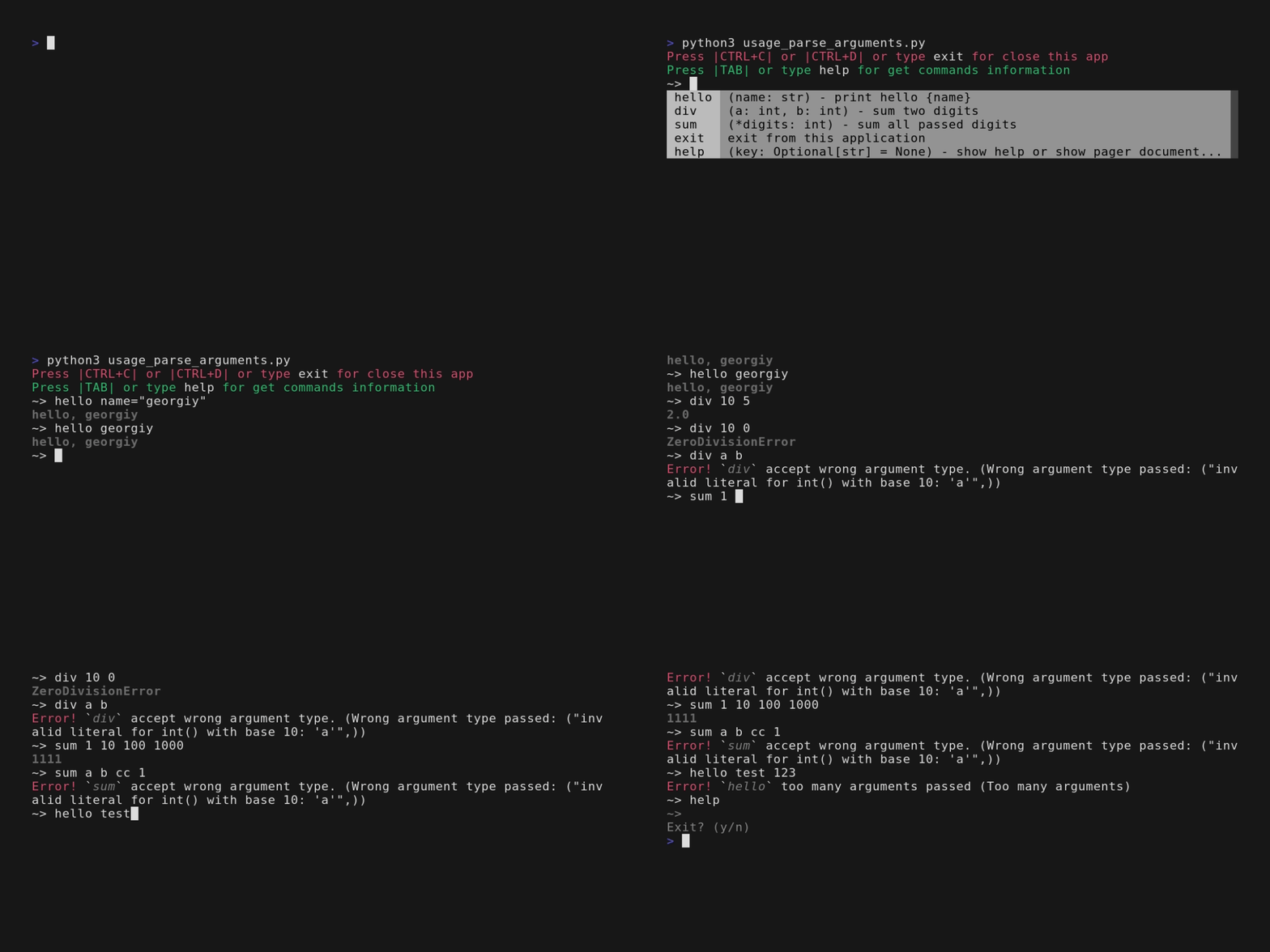
You can pass arguments in named form, EG
hello name="Georgiy"In
sumanddiv, when passing a non-numeric argument, the program will crash with an error. This page will address this question in the Error handle section.
Default arguments
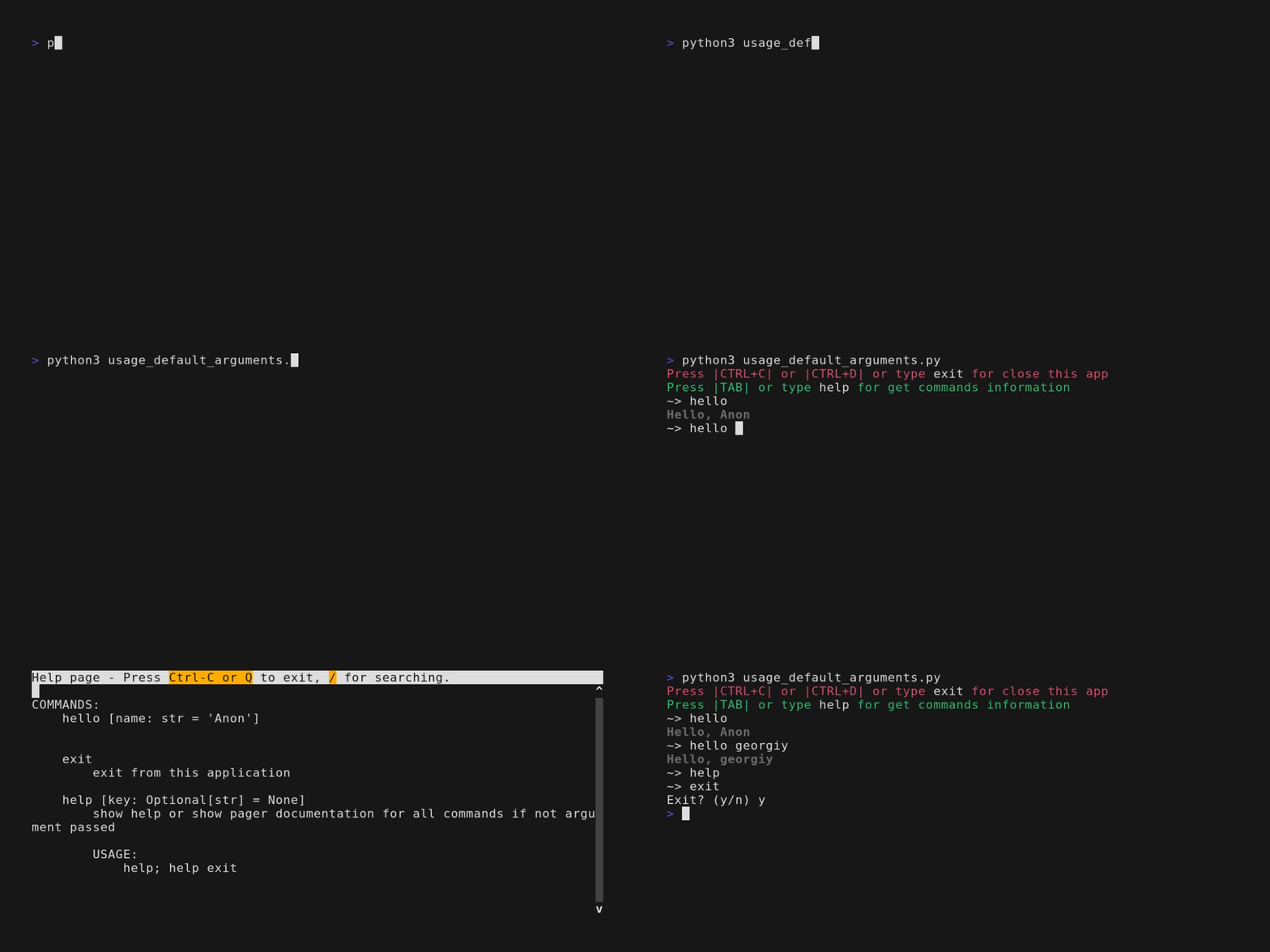
You can set default value(s):
from eggella import Eggella

app = Eggella(__name__)


@app.on_command()
def hello(name: str = "Anon"):
    return f"Hello, {name}"


if __name__ == '__main__':
    app.loop()
If you don't pass a name parameter, it will default to
"Anon"
Custom parse arguments handler
In some cases, the standard argument handler may not be suitable.
You can use build-in RawCommandHandler - ignores argument tokenization and type casting
passes the entire string to the function.
from eggella import Eggella
from eggella.command import RawCommandHandler

app = Eggella(__name__)


@app.on_command(cmd_handler=RawCommandHandler())
def echo(command: str):
    return command


if __name__ == '__main__':
    app.loop()
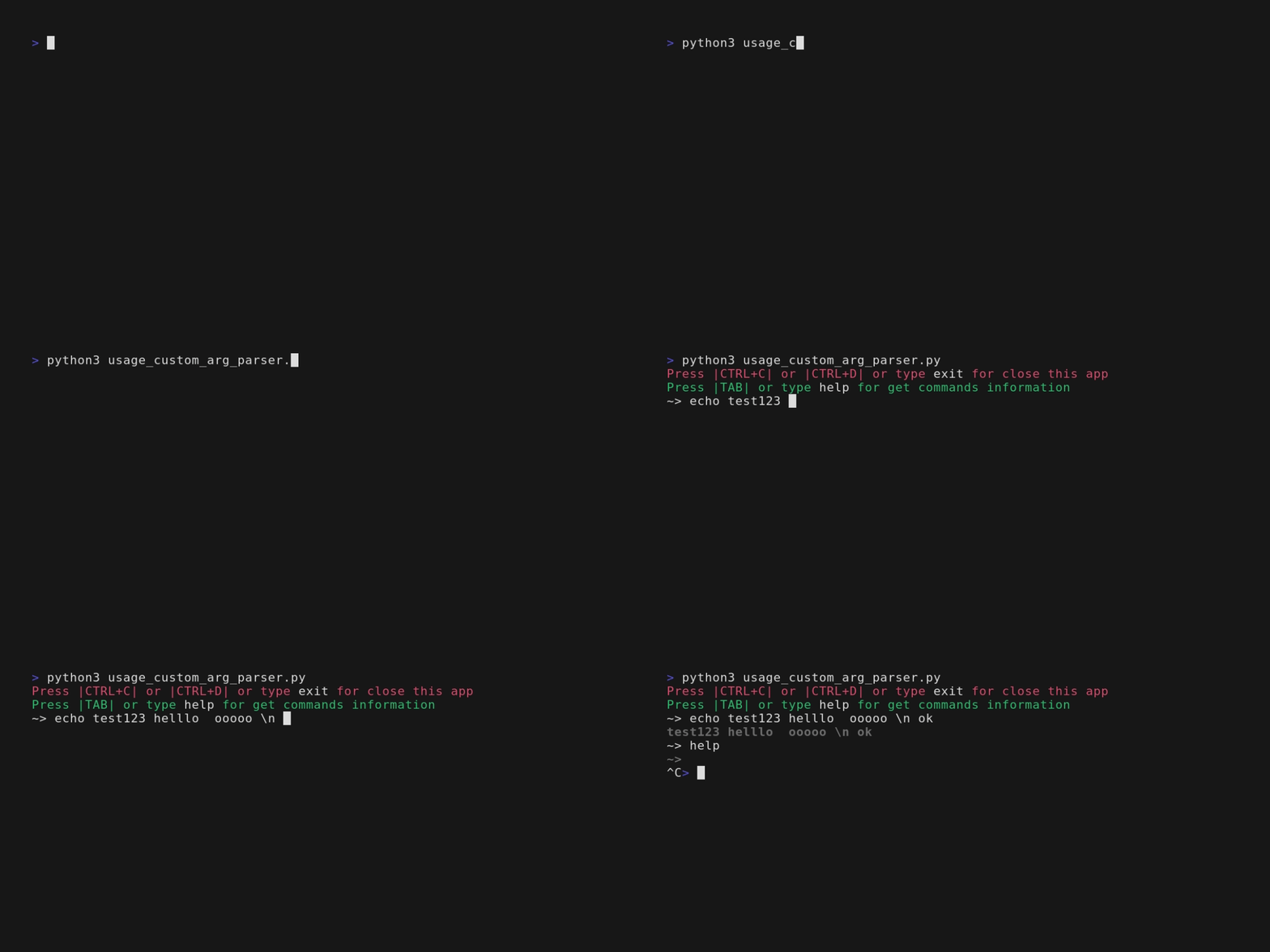
Command handler customization will be in the Advanced section
Nested completer
If additional command hints and descriptions are needed:
In
nested_metafor correct meta output, keys should be unique.
from eggella import Eggella
from eggella.command import RawCommandHandler

app = Eggella(__name__)


@app.on_command(
    cmd_handler=RawCommandHandler(),
    nested_completions={
        "proxy": {
            "socks": {"socks5://", "socks4://"},
            "http": {"https://", "http://"},
        },
        "timeout": {"0", "30", "60"},
        "render": {"spam", "egg", "foobar"},
    },
    nested_meta={
        "proxy": "set proxy",
        "socks": "usage SOCKS4/5 protocol",
        "http": "usage http(s) protocol",
        "timeout": "set request timeout",
        "render": "render a string object",
        "spam": "spammmm object",
        "egg": "wow! eggs!",
        "foobar": "rly? :O",
    },
)
def config(query: str):
    return f"Your answer: {query}"


if __name__ == '__main__':
    app.loop()

Error handle
In the Parse arguments section, when passing a non-numeric argument to commands
sum and div - the program crashes with an error. You can create an error handler for such situations:
from eggella import Eggella

app = Eggella(__name__)


@app.on_error(ZeroDivisionError)
def zero_div_err(*_, **__):
    return "ERROR! ZeroDivisionError"


@zero_div_err
@app.on_command()
def div(a: int, b: int):
    """div two digits"""
    return a/b


if __name__ == '__main__':
    app.loop()

App storage
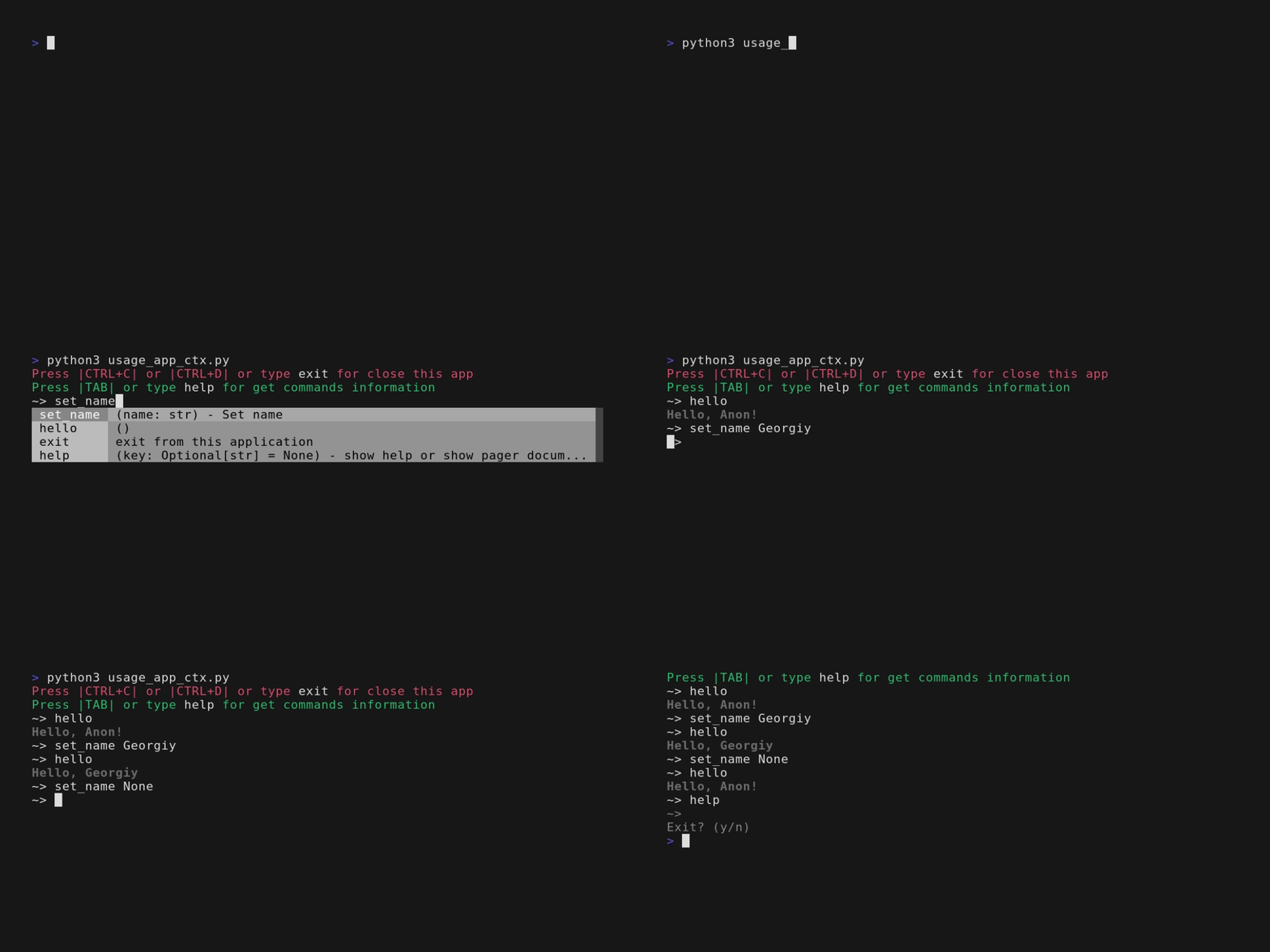
You can store variables in app.CTX storage (it's a standard python dict)
from eggella import Eggella

app = Eggella(__name__)

@app.on_command()
def set_name(name: str):
    """Set name variable"""
    app.CTX["name"] = name


@app.on_command()
def hello():
    if name := app.CTX.get("name"):
        return f"Hello, {name}"
    return "Hello, Anon!"


if __name__ == '__main__':
    app.loop()
Shortcuts
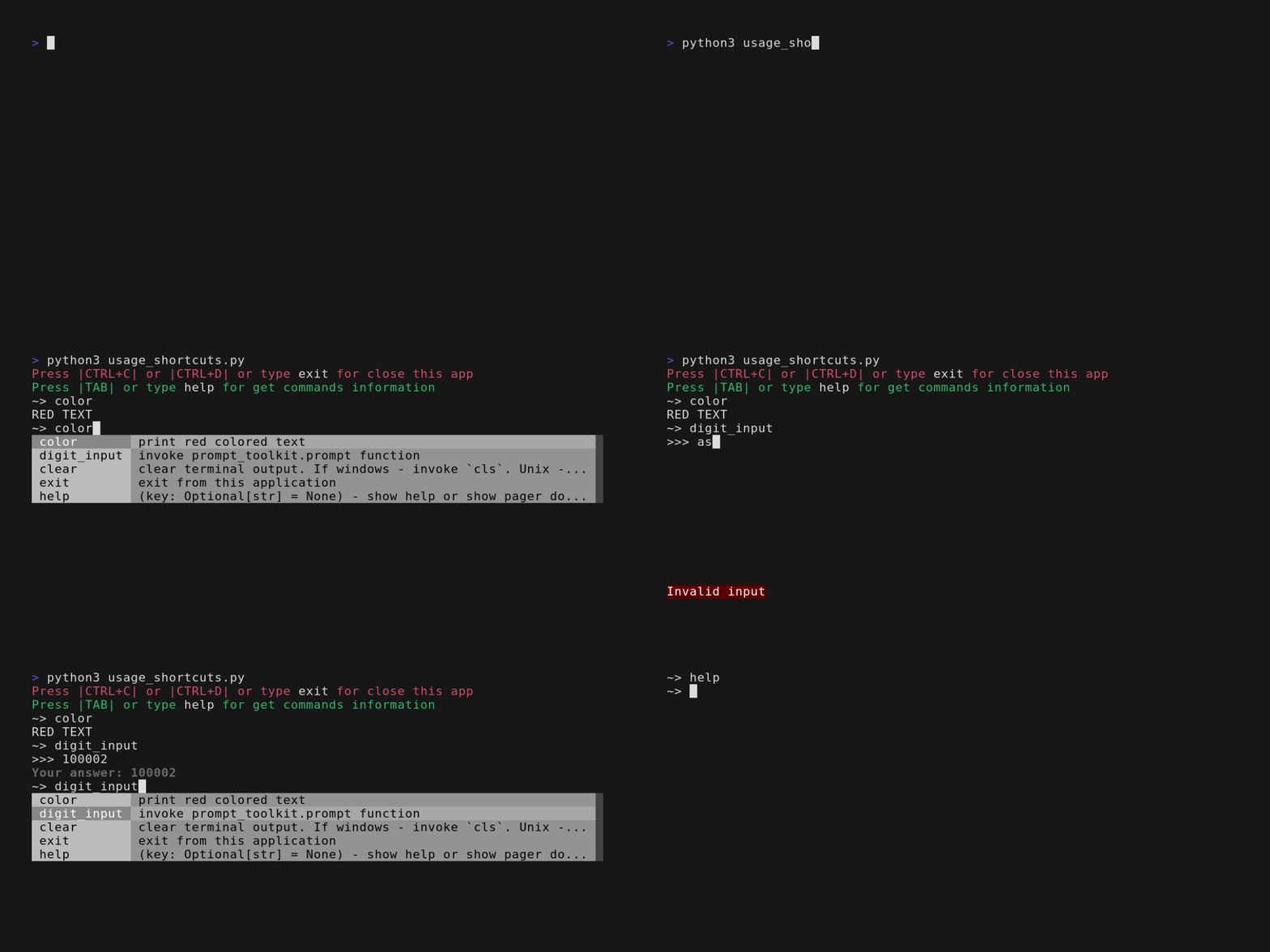
The application has aliases of some methods to reduce the number of imports from prompt_toolkit
and they are stored in Eggella.cmd
from eggella import Eggella

from prompt_toolkit import HTML
from prompt_toolkit.validation import Validator
app = Eggella(__name__)


@app.on_command()
def color():
    """print red colored text"""
    # alias prompt_toolkit.print_formatted_text
    app.cmd.print_ft(HTML("<ancired>RED TEXT</ancired>"))


@app.on_command()
def digit_input():
    """invoke prompt_toolkit.prompt function"""
    # alias prompt_toolkit.prompt
    ans = app.cmd.prompt(">>> ", validator=Validator.from_callable(lambda s: s.isdigit()))
    return f"Your answer: {ans}"

@app.on_command()
def clear():
    """clear terminal output. If windows - invoke `cls`. Unix - `clear`"""
    app.cmd.clear()


if __name__ == '__main__':
    app.loop()
FSM
FSM aka Finite-state machine designed to simplify the organization of the "branch" logic of the program.
from typing import Optional

from prompt_toolkit.validation import Validator

from eggella import Eggella
from eggella.fsm import IntStateGroup


class LoginForm(IntStateGroup):
    EMAIL = 0
    PASSWORD = 1
    ACCEPT = 2


# prompt validators
password_validator = Validator.from_callable(lambda s: len(s) > 6 or s == "..",
                                             error_message="password len should be bigger than 6")

email_validator = Validator.from_callable(lambda s: "@" in s or s == "..",
                                          error_message="email is not valid")

confirm_validator = Validator.from_callable(lambda s: s in {"y", "n"})


app = Eggella(__name__)
app.register_states(LoginForm)


@app.on_command("auth")
def auth(email: Optional[str] = None, password: Optional[str] = None):
    """auth to service.

    if email and password not passed - invoke interactive auth
    """
    if email and password:
        print("Success auth!")
        print("Email:", email)
        print("Password:", "*" * len(password))
    else:
        app.fsm.run(LoginForm)


@app.on_state(LoginForm.EMAIL)
def email():
    result = app.cmd.prompt("Enter email > ", validator=email_validator)
    if result == "..":
        return app.fsm.finish()
    app.fsm.ctx["email"] = result
    app.fsm.next()


@app.on_state(LoginForm.PASSWORD)
def password():
    # alias from prompt_toolkit.prompt functon
    result = app.cmd.prompt("Enter password > ", is_password=True, validator=password_validator)
    if result == "..":
        return app.fsm.prev()
    app.fsm.ctx["password"] = result
    app.fsm.next()


@app.on_state(LoginForm.ACCEPT)
def finish():
    print("Your input:")
    print("email:", app.fsm["email"])
    print("if correct, type `y` or `n` for back prev step")
    confirm = app.cmd.prompt("(y/n)> ", validator=confirm_validator)
    if confirm == "n":
        return app.fsm.prev()
    auth(app.fsm["email"], app.fsm["password"])
    # don't forget to close FSM!
    app.fsm.finish()


if __name__ == '__main__':
    app.loop()
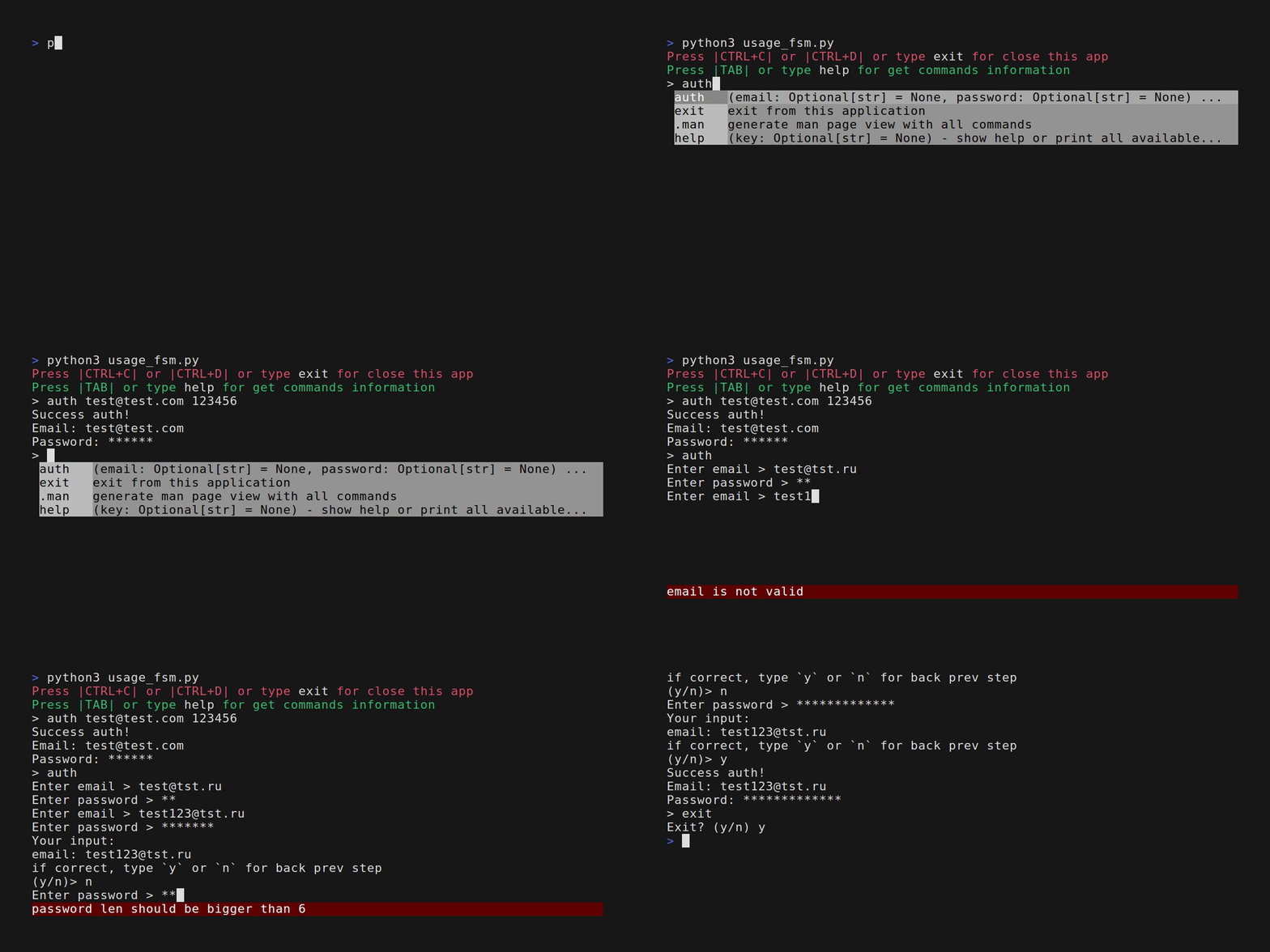
Program description:
To add FSM you nedd:
- Declare a class by inheriting Enum class
IntStateGroup - Register this state group class using
app.register_states(...) -
Usage
on_state(<IntStates.num>)to call function given a state. -
IntStateGroup - IntEnum class.
Methods:
app.fsm- access to manager FSM statesapp.fsm.run(<IntStates>)- Run FSM in first stateapp.fsm.start(<IntStates.num>)- Run FSM from a given stateapp.fsm.next()- Move to the next state. If this is the last state - callsfinish.app.fsm.prev()- Move to the prev state. If this is the first state - callsfinish.app.fsm.set(<IntStates.num>)- Move to a given stateapp.fsm[<key>]- FSM storage access (get, set)app.fsm.finish()- Close FSM. All written values in the FSM storage are deleted automatically.
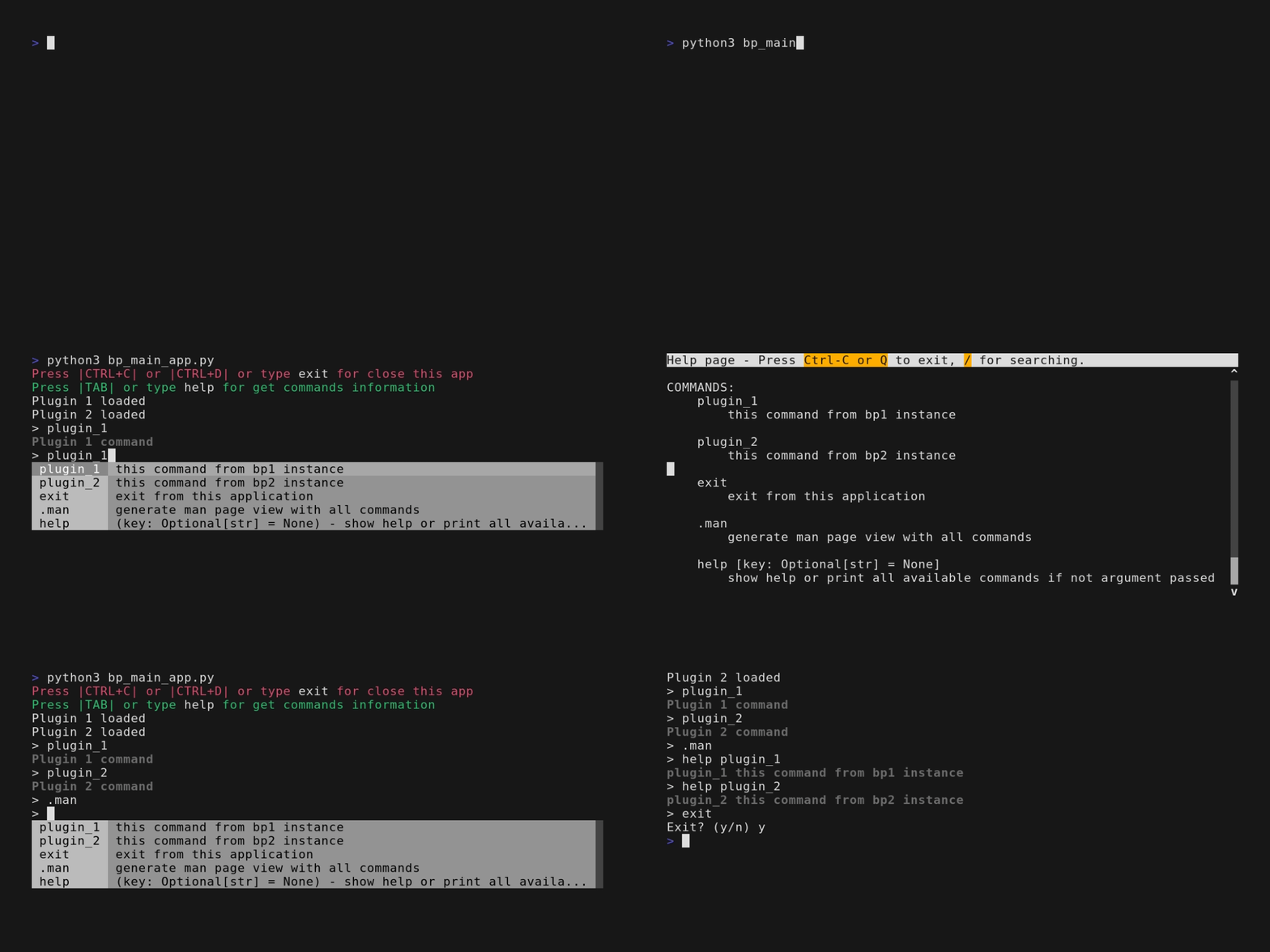
Blueprints
Eggella has blueprints implemented and the idea simular to flask Blueprint
You can separate code or organize plugin system
bp_plugins.py
from eggella import Eggella

# all app instances should be unique name
bp1 = Eggella("plugin 1")
bp2 = Eggella("plugin 2")

__all__ = ["bp1", "bp2"]


@bp1.on_startup()
def plugin_loaded():
    print("Plugin 1 loaded")


@bp1.on_command("plugin_1")
def cmd1():
    """this command from bp1 instance"""
    return "Plugin 1 command"


@bp2.on_startup()
def plugin_loaded2():
    print("Plugin 2 loaded")


@bp2.on_command("plugin_2")
def cmd2():
    """this command from bp2 instance"""
    return "Plugin 2 command"
bp_main_app.py
Notes
- Command keys should be unique, if you want to overwrite commands from
register_blueprint()method, disable overwrite command flag:
from eggella import Eggella

app = Eggella(__name__)
# enable overwrite commands from blueprints
app.overwrite_commands_from_blueprints = True

# app.register_blueprint()
- Of the applications that are passed to the
register_blueprint()method, only the following events are registered: - on_startup()
- on_close()
- on_command()
- on_state()